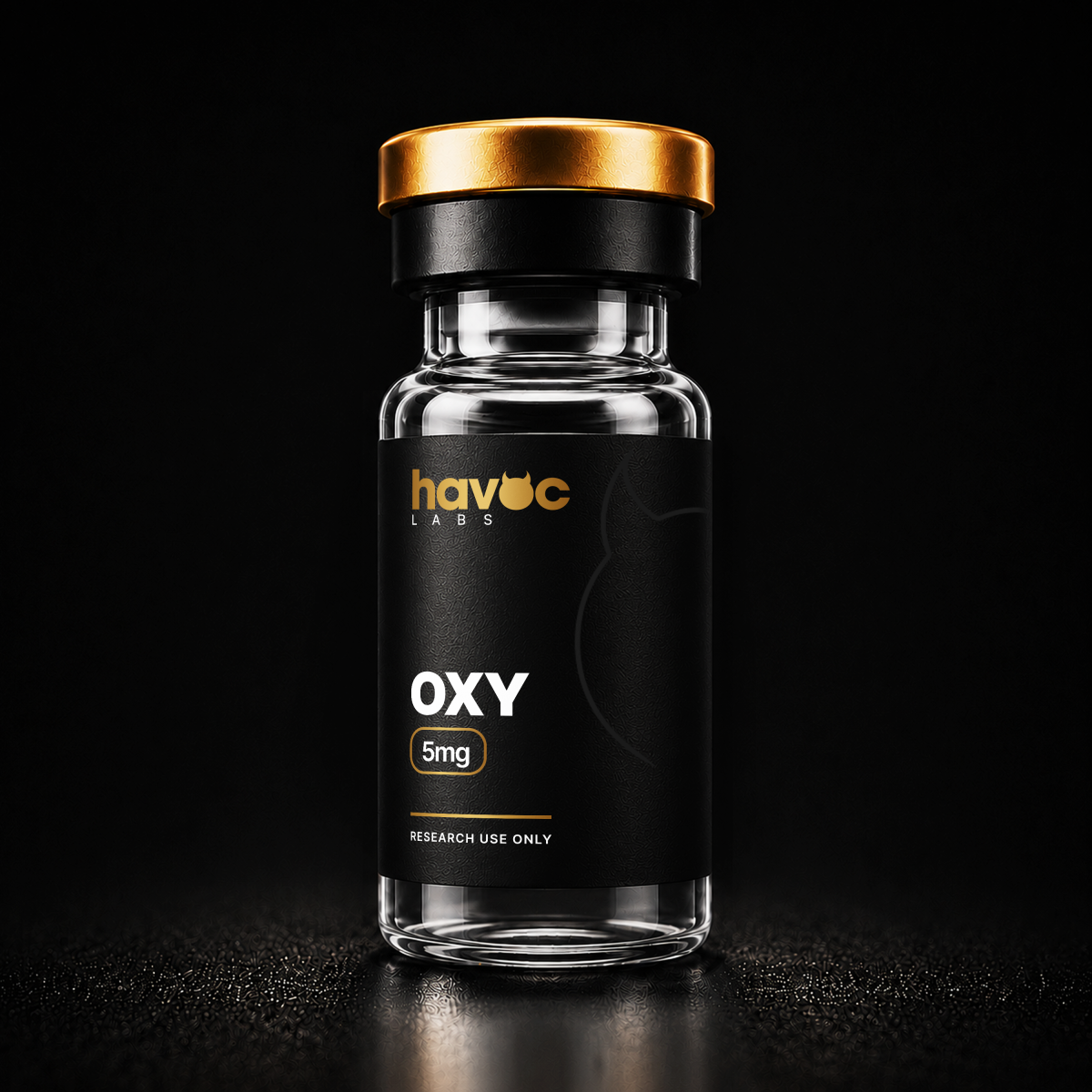

Oxytocin is a cyclic nine-amino-acid peptide hormone studied in receptor signalling, reproductive physiology and social-behaviour research. This vial is supplied as a laboratory research material, not as a clinical oxytocin preparation.
Compound overview
Research context
Endogenous oxytocin acts through the oxytocin receptor, a G-protein-coupled receptor, and is involved in uterine contraction and milk ejection. Experimental research also examines oxytocin signalling in social cognition and behaviour. These areas differ substantially in experimental setting, formulation and outcome.
Human intranasal studies have reported mixed findings: an early trust-game study found an effect, a registered replication did not reproduce it under a key study condition, and a larger autism trial found no improvement over placebo on its primary social-function outcome. These studies do not establish a general behavioural effect or support use of this research material in people. See the Research tab for study-specific references.
Batch documentation
Independent analytical documentation is published where available for specific batches and variations. A result indicator appears only when a published record is available. Match the compound, vial size and batch identifier to the corresponding report before relying on any result.
Supply and laboratory handling
- Supplied in the vial size selected above.
- Provided as a lyophilised research material.
- Keep the vial sealed and protected from moisture, heat and direct light.
- Use suitable laboratory controls and independently verify identity and concentration for the intended experimental model.
Frequently asked questions
What is oxytocin?
Oxytocin is an endogenous cyclic nonapeptide hormone. It has nine amino acids and a disulfide bridge between two cysteine residues.
Is this a clinical oxytocin medicine?
No. This product is a research material and is not supplied or characterised as a medicine, sterile preparation or product for human or veterinary administration.
What does the human research show?
Study findings depend on the population, formulation and outcome. Some early social-behaviour results were not reproduced in a registered replication, and a larger placebo-controlled autism trial did not improve its primary outcome.
Which vial size will I receive?
The supplied quantity is determined by the variation selected above. This description applies across available vial sizes.
Where can I find batch testing?
Check the product testing information for a published report matching the selected variation and batch. Published research is separate from batch-specific analytical documentation.
How should laboratory storage be determined?
Keep the material sealed and protected from moisture, heat and light. Follow batch documentation and the requirements of the validated laboratory protocol; solution stability depends on the experimental conditions.
Information reviewed 28 September 2026. Reference: PubChem compound record.