Oxytocin
Oxytocin

Price range: £19.99 through £29.99

Add to basket This product has multiple variants. The options may be chosen on the product page

Oxytocin

Price range: £19.99 through £29.99

  • UK Stock
  • Secure Payments
  • Discreet UK Delivery

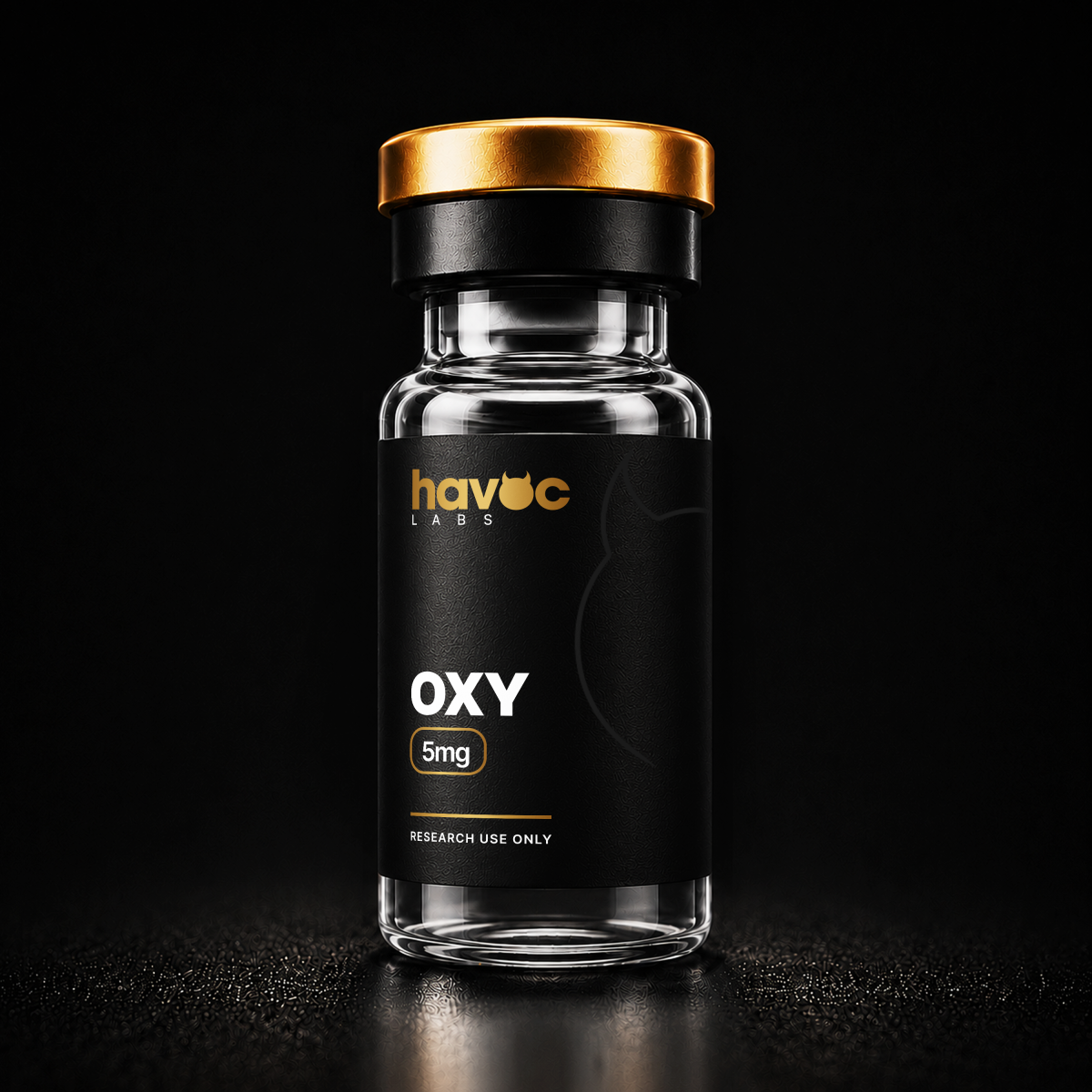
Oxytocin, a cyclic nine-amino-acid peptide hormone, supplied for laboratory research and analytical applications.

Batch-specific analytical documentation is available where published. Select the required vial size above.

Research use only. Not for human or veterinary use.

COMPLETE YOUR KIT

Bacteriostatic Water
Price range: £3.99 through £8.99
1 Vial
£19.99
1 Vial
£17.99 Save 10%
3 Vials
£16.99 Save 15%
5 Vials
£15.99 Save 20%

For in vitro laboratory research only.
Not for human or veterinary use. Not for diagnosis, treatment, cure, or prevention of any disease. No dosage, administration, or injection guidance is provided.

This product is currently sold out!

No worries! Please enter your e-mail address and we will promptly notify you as soon as the item is back in stock.

Great! You have been added to the waitlist for this product. Please check your inbox and confirm the subscription to this waitlist.

Oxytocin is a cyclic nine-amino-acid peptide hormone studied in receptor signalling, reproductive physiology and social-behaviour research. This vial is supplied as a laboratory research material, not as a clinical oxytocin preparation.

Research material only This material is not supplied as a medicine, treatment, supplement or consumer product. It is not for human or veterinary use, consumption or administration, and is not intended to diagnose, treat, cure or prevent any disease.

Compound overview

Compound nameOxytocin
Compound classCyclic peptide hormone
Peptide length9 amino acids
Reference sequenceCYIQNCPLG-NH₂
Structural featureDisulfide bridge between Cys 1 and Cys 6
Research targetOxytocin receptor (OXTR)

Research context

Endogenous oxytocin acts through the oxytocin receptor, a G-protein-coupled receptor, and is involved in uterine contraction and milk ejection. Experimental research also examines oxytocin signalling in social cognition and behaviour. These areas differ substantially in experimental setting, formulation and outcome.

Human intranasal studies have reported mixed findings: an early trust-game study found an effect, a registered replication did not reproduce it under a key study condition, and a larger autism trial found no improvement over placebo on its primary social-function outcome. These studies do not establish a general behavioural effect or support use of this research material in people. See the Research tab for study-specific references.

Batch documentation

Independent analytical documentation is published where available for specific batches and variations. A result indicator appears only when a published record is available. Match the compound, vial size and batch identifier to the corresponding report before relying on any result.

Supply and laboratory handling

  • Supplied in the vial size selected above.
  • Provided as a lyophilised research material.
  • Keep the vial sealed and protected from moisture, heat and direct light.
  • Use suitable laboratory controls and independently verify identity and concentration for the intended experimental model.

Frequently asked questions

What is oxytocin?

Oxytocin is an endogenous cyclic nonapeptide hormone. It has nine amino acids and a disulfide bridge between two cysteine residues.

Is this a clinical oxytocin medicine?

No. This product is a research material and is not supplied or characterised as a medicine, sterile preparation or product for human or veterinary administration.

What does the human research show?

Study findings depend on the population, formulation and outcome. Some early social-behaviour results were not reproduced in a registered replication, and a larger placebo-controlled autism trial did not improve its primary outcome.

Which vial size will I receive?

The supplied quantity is determined by the variation selected above. This description applies across available vial sizes.

Where can I find batch testing?

Check the product testing information for a published report matching the selected variation and batch. Published research is separate from batch-specific analytical documentation.

How should laboratory storage be determined?

Keep the material sealed and protected from moisture, heat and light. Follow batch documentation and the requirements of the validated laboratory protocol; solution stability depends on the experimental conditions.

Information reviewed 28 September 2026. Reference: PubChem compound record.

Size

5mg, 10mg

Batch-specific analytical documentation

Independent analytical results are published for selected Havoc Labs products, vial sizes and batches. The result attached to one variation must not be treated as evidence for a different size or batch.

  • Result available: a published report is available for the marked variation.
  • Test pending: a sample has been submitted, but no completed result is being claimed.
  • No indicator: no product-specific result is currently displayed for that variation.

Check the identifiers

Always match the compound, vial size and batch reference on the product to the corresponding laboratory record. Where the laboratory provides an independent verification facility, use it to confirm the report.

Browse published lab results →

Storage and stability

Storage requirements can vary by compound, physical form, intended storage duration and batch. Follow the lot-specific documentation and your laboratory’s validated procedure wherever these are available.

Form Suggested storage Important note
Sealed lyophilised material Keep in a cool, dry place, refrigerated at 2–8°C or frozen, as appropriate for the compound and intended storage period. Keep sealed, dry and protected from direct light. Follow compound- and batch-specific documentation and avoid repeated temperature cycling.
Reconstituted solution Refrigerate at 2–8°C unless the applicable laboratory protocol specifies otherwise. Stability depends on the preparation conditions, solvent, concentration, container and handling. No universal storage period is claimed.

No universal shelf-life is claimed

Do not assume a fixed expiry or prepared-solution storage period unless it is supported by relevant stability data or batch documentation. Where a lot-specific document gives different instructions, that document takes precedence.

Published research

These sources cover oxytocin receptor biology and human experimental studies. Social-behaviour findings are mixed, and clinical studies of formulated oxytocin do not establish the identity, safety or suitability of this research vial.

  1. Gimpl G and Fahrenholz F (2001). The oxytocin receptor system: structure, function, and regulation. Physiological Reviews 81(2):629–683.

    A detailed review of oxytocin receptor structure and signalling, including established peripheral physiology and central research. It provides mechanistic background, not batch-specific product evidence.

    DOI: 10.1152/physrev.2001.81.2.629 · PubMed record

  2. Kosfeld M et al. (2005). Oxytocin increases trust in humans. Nature 435:673–676.

    In a controlled trust-game experiment, the investigators reported greater trusting behaviour after intranasal oxytocin. The outcome was specific to the study task and should not be generalised to everyday behaviour or to this product.

    DOI: 10.1038/nature03701 · PubMed record

  3. Declerck CH et al. (2020). A registered replication study on oxytocin and trust. Nature Human Behaviour 4:646–655.

    A larger double-blind, placebo-controlled registered replication found no oxytocin effect on trusting behaviour in its minimal-social-contact condition. An exploratory subgroup observation requires independent confirmation. This qualifies the earlier trust-game result.

    DOI: 10.1038/s41562-020-0878-x · PubMed record

  4. Sikich L et al. (2021). Intranasal Oxytocin in Children and Adolescents with Autism Spectrum Disorder. New England Journal of Medicine 385:1462–1473.

    In a 24-week randomised placebo-controlled trial enrolling 290 participants, oxytocin did not significantly improve the primary social-withdrawal outcome or generally improve secondary social-function measures versus placebo. The studied clinical formulation is not this research material.

    DOI: 10.1056/NEJMoa2103583 · PubMed record

Literature is not batch evidence Publications do not verify the identity, purity, content or suitability of any supplied batch. Research use only; not for human or veterinary use.

References reviewed 28 September 2026.